
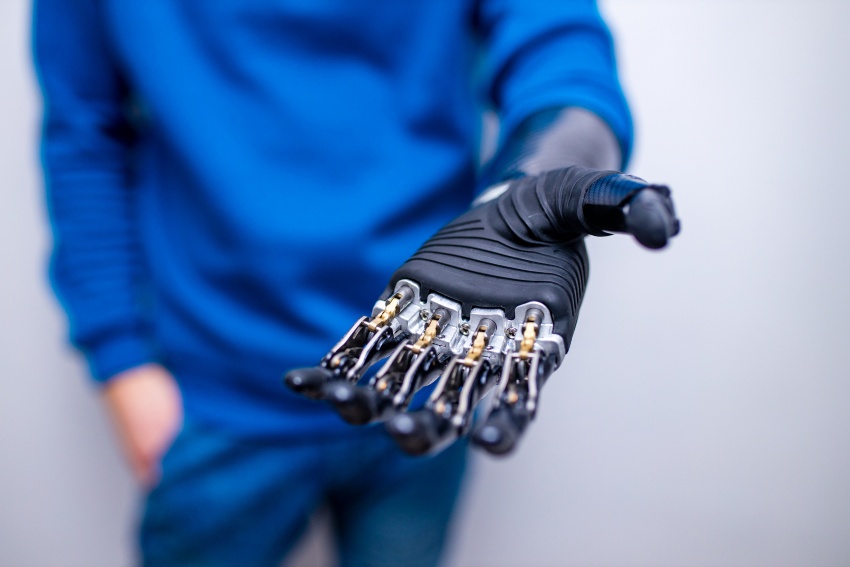
What Are Motion Control Prosthetics?
Picture reaching for a coffee mug and watching a prosthetic hand close around it because you flexed a muscle in your forearm. Motion control prosthetics are available for many different parts of the body, and can give you much more control over your daily life. Bio Dynamic Technologies breaks down motion control prosthetics for patients in New York, New Jersey, and Connecticut. If the term left you a little lost, you’re in good company. We get questions about these devices all the time, and the answers are less intimidating than the technology sounds.
What Makes a Prosthetic “Motion-Controlled”?
Most older prosthetic devices rely on body movement alone. You shrug a shoulder or shift your weight, and cables or mechanical joints respond. Motion control prosthetics add electronics to the picture. Sensors pick up signals from your body, and small motors or processors turn those signals into movement. It can take some learning, but it often gives a patient more mobility and articulation than older types of prosthetics.
What’s Inside One of These Devices?
Every motion control prosthetic shares a handful of core parts, even if they look different from one patient to the next. Knowing what each piece does makes it a lot easier to follow along when your prosthetist starts talking shop during your appointment. Some of the common features include:
- Custom Socket: The socket holds the device to your residual limb, and its fit affects everything else.
- Sensors or Electrodes: Small sensors inside the socket pick up muscle signals or track movement.
- Processor: A built-in controller reads incoming signals and decides how the device should respond.
- Motors and Battery: Powered components drive the movement and need regular charging.
The Main Types You’ll Hear About
Motion control technology shows up on both the upper and lower body. For arms and hands, myoelectric prostheses are the big name. They use electrodes to read muscle contractions, so tightening certain muscles can open or close a powered hand. Lower limb devices work differently. A power knee uses a motor to assist bending and straightening, which can help with standing up or tackling stairs. Microprocessor prosthetic knees are another option many people ask about when researching lower limb prosthetics for active lifestyles.
Why Some People Choose Motion Control
These devices aren’t the right fit for everyone, but plenty of patients find them worth exploring. Here are a few reasons people tell us they’re interested in motion control prosthetics when they first sit down with our team to compare options.
- More Responsive Movement: Powered components can react to your signals instead of relying only on body motion.
- Less Harnessing: Many myoelectric arms need fewer straps across the shoulders than cable-driven designs.
- Help With Tough Tasks: A power knee can provide motorized assistance when standing or climbing.
- Personal Adjustment: Your prosthetist can tune settings to match how you actually move.
Could You Be a Good Candidate?
The only way to truly know is through an evaluation. Some people have strong, consistent muscle signals in their residual limb, which matters a lot for myoelectric control. Others care more about everyday comfort than powered features, and a simpler design suits them better. We work alongside your physicians and physical therapists before and after surgery so the device you get lines up with their guidance. A retired accountant in Stamford and a construction worker in Newark might walk away with very different recommendations.
Keeping Your Device Running Smoothly
Electronics need a bit more attention than purely mechanical prosthetic devices. Charge your battery on a regular schedule, ideally overnight, so you’re not stuck with a dead battery halfway through your commute. Wipe the socket and liner daily with mild soap and water, and let everything dry fully. Keep the electronic components away from water unless your prosthetist tells you otherwise. If responses start lagging or the fit suddenly feels off, call us before trying any fixes yourself.
Where This Technology Is Heading
Researchers and manufacturers keep working on ways to make motion control more intuitive. Pattern recognition systems, which read combinations of muscle signals rather than one at a time, are already showing up in some upper limb devices. Sockets keep getting more precise thanks to tools like 3D printing. We can’t promise what next year’s devices will look like, but our team keeps up with new prosthetic solutions so we can talk through realistic options with every prosthetic user who comes through our doors.
Let’s Talk About What Fits Your Life
Curious whether custom prosthetics with motion control make sense for you? Book a free consultation at one of our offices in New York City, Greenwich, or East Rutherford. We serve patients across the Tri-State Area. Along with mobility support devices and comfortable prosthetic solutions, we also provide orthotics and braces for everyday use. If you’re searching for ABC-certified prosthetists near you, schedule a free consultation now. Anything you share through our contact forms stays private and is handled in line with HIPAA requirements.